
Explore Tetouan – You're at the point of exploring the city
Explore Tetouan – You're at the point of exploring the city
This year, the festival presents a program structured around several sections: the opening film, ten films in competition, audience favorites, award-winning films, and a selection of works screened as part of tributes, according to a statement from the Festival Foundation.
The selection reflects the diversity of perspectives and experiences within Mediterranean cinema, exploring unique stories, life journeys, and the social, cultural, and political issues specific to the region.
It also highlights the dialogue between heritage and contemporary creation, between personal narratives and collective concerns, offering a vibrant and multifaceted vision of the Mediterranean basin.
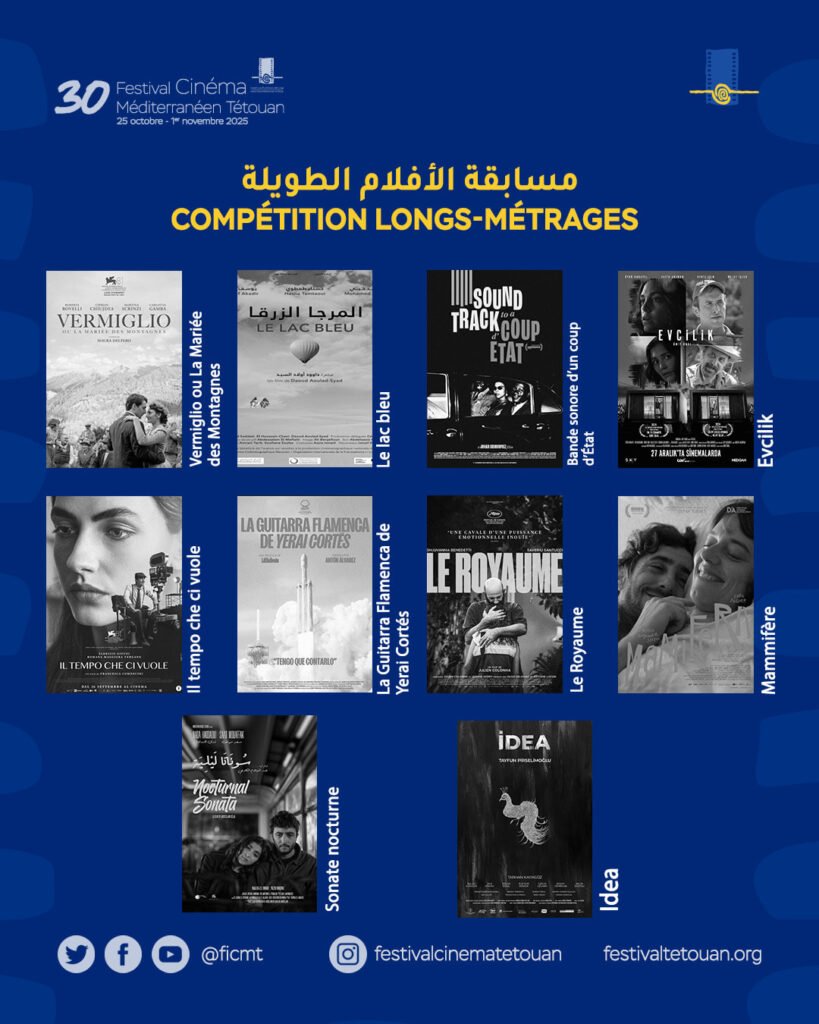
Ten recent feature films and documentaries are competing this year for the festival’s awards. Coming from eight different countries, these films cover a wide range of genres — from intimate fiction to socially engaged documentary.
The films in competition are: “Vermiglio or La Marie e des Montagnes” by Maura Delpero (Italy, France, Belgium), “The Blue Lake” by Daoud Aoulad-Syad (Morocco), “Soundtrack to a Coup d’État” by Johan Grimonprez (France, Belgium), “Evcilik” by Ümit Ünal (Turkey), “Il tempo che ci vuole” by Francesca Comencini (Italy, France), “La Guitarra Flamenca de Yerai Cortés” by Antón Álvarez (Spain), “The Kingdom” by Julien Colonna (France), “Mammifère” by Liliana Torres (Spain), “Nocturnal Sonata” by Abdeslam Kelai (Morocco), and “Family Therapy” by Sonja Prosenc (Slovenia, Italy, Croatia, Norway, Serbia).
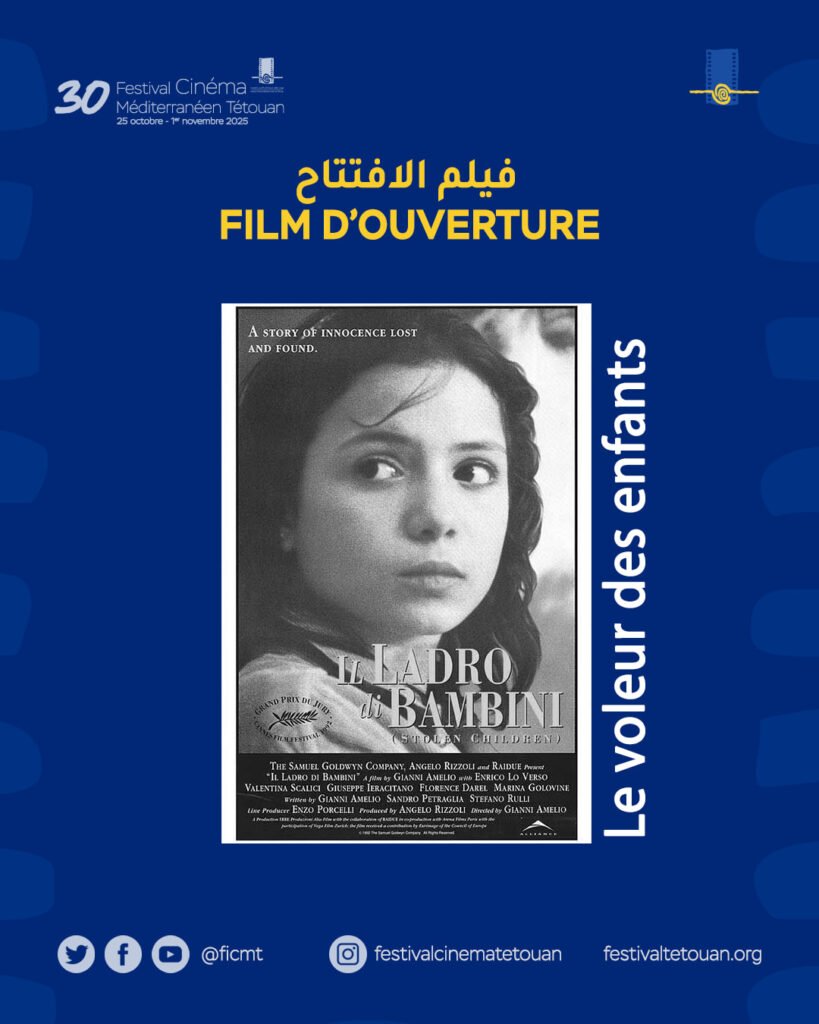
The festival will open its 30th edition with “Il ladro di bambini” (The Stolen Children) by Gianni Amelio (Italy, 1992), an emblematic work of Italian cinema, acclaimed for its sensitive direction and its profound insight into childhood.
The choice of this film—screened in Tetouan during one of the festival’s earliest editions—symbolizes the event’s desire to reconnect with its history and reaffirm, through this symbolic return, its deep attachment to the Mediterranean as a space of creation, memory, and cinematic reflection, according to the same source.
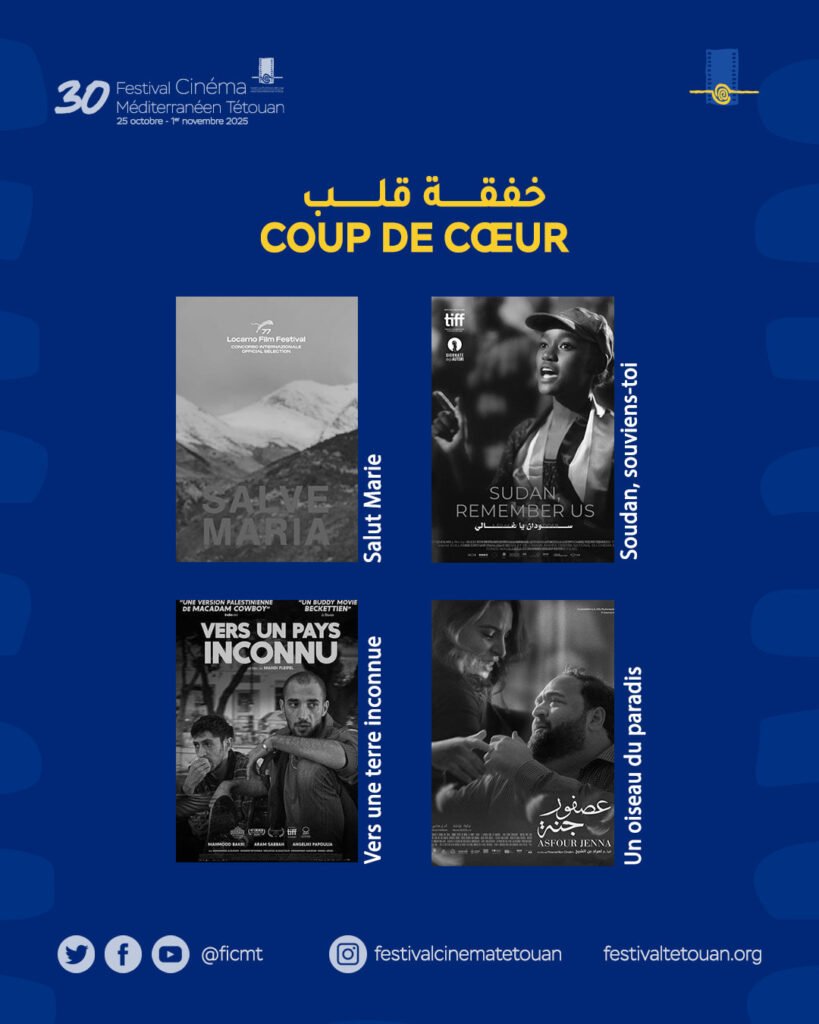
Four films have been selected as the festival’s “favorites,” highlighting filmmakers and stories that stand out for their themes, formats, and unique approaches to contemporary Mediterranean creation.
These are “Salut Marie” by Mar Coll (Spain), “Towards an Unknown Land” by Mahdi Fleifel (Greece, Denmark, United Kingdom, Netherlands), “A Bird from Paradise” by Mourad Ben Cheikh (Tunisia, Italy), and “Sudan, Remember” by Hind Meddeb (France, Tunisia, Qatar).
The festival will also showcase a selection of emblematic films from previous editions that continue to resonate with audiences and inspire new generations of filmmakers.
These include “The Mosque” by Daoud Aoulad-Syad (Morocco, France), “3000 Nights” by Mai Masri (Lebanon, Palestine), “The Open Door” by Marina Seresesky (Spain), “The Veiled Man” by Maroun Bagdadi (Lebanon, France), and “Naouara” by Hala Khalil (Egypt).
As part of tributes to Nabil Ayouch, Eyad Nassar, and Aida Folch, the festival will present a selection of films illustrating their respective careers.
A retrospective dedicated to Moroccan filmmaker Nabil Ayouch will feature six films that have marked Moroccan and Mediterranean cinema: “Mektoub” (1997), “Ali Zaoua” (2000), “Whatever Lola Wants” (2007), “Horses of God” (2012), “Razzia” (2017), and “Everybody Loves Touda” (2024).
Two works will be shown for Eyad Nassar: “One and a Half Hours” by Wael Ihsan (Egypt, 2012) and “The Green Door” by Raouf Abdul Aziz (Egypt, 2022). The tribute to Aida Folch will include “La isla perdida” (The Lost Island) by Fernando Trueba (2024) and “Mondays in the Sun” by Fernando León de Aranoa (2002).
Since its creation in 1985 by the association Friends of Cinema of Tetouan (ACT), the Tetouan Mediterranean Film Festival has continuously promoted the cinematographies of the mare nostrum and upheld the values of a demanding and diverse cinephilia.
Known for its commitment and its contribution to the dissemination of Mediterranean cinema, the festival is above all the festival of a city—Tetouan—a fertile ground for the arts, from music to visual arts, which has long hosted and continues to host artistic movements that shine far beyond the region.
It was therefore in this culturally rich city that, quite naturally, a group of cinema-loving teachers conceived this project, at a time when the film clubs in which they had been trained were disappearing across Morocco.
Writed by : 2m
Transelate by : ExploreTetouan
Need help or have questions about your trip to Tetouan? We’re here for you — just get in touch!